
Burkina Faso: New territorial organization to restore state authority
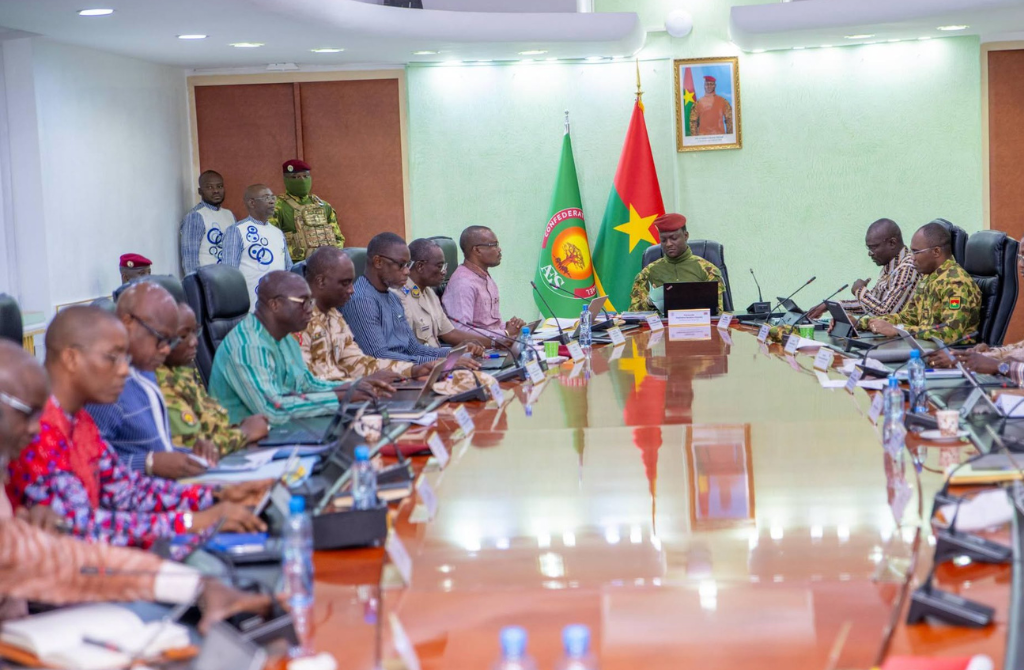
Since Captain Ibrahim Traoré came to power, Burkina Faso has embarked on a profound institutional transformation. The revision of the Constitution of 2 June 1991, which was examined on 20 January 2026 by the People’s Legislative Assembly, is a major step in this process.
The draft constitutional law provides for substantial amendments, in particular articles 143 and 144 relating to administrative and territorial organization. The objective is to better supervise administrative districts and local authorities, by learning from the inadequacies of decentralization. Title XI, initially entitled « Territorial Collectivities », becomes « On the organization of the territory », marking a rebalancing in favor of administrative deconcentration.
According to the report of the General Affairs Committee, the decentralization undertaken since the 1990s has favored « the destitution of decentralized structures » and a « strong politicization of the public administration, weakening the authority of the State ». The reform aims to restore a more efficient local administration. From now on, administrative districts will be created and abolished by decree, while local authorities will remain under the jurisdiction of the law.
Another major innovation is the creation of a single body responsible for regulating communication and the protection of personal data, through the merger of the High Council for Communication and the Commission for Information Technology and Freedoms. The Supreme Authority for State Control and Anti-Corruption will also be replaced by a new institution.
This revision is part of a broader process. On March 27, 2026, the Assembly unanimously adopted the Charter of the People’s Progressive Revolution, which replaces the Charter of the Transition. This new charter legally enshrines the RPP, provides for the abolition of the « political parties » component within the legislative body and makes the President of Burkina Faso eligible for the next elections.
In this context, the Constitutional Council plays a central role. Its president, Barthélemy Kéré, reaffirmed the institution’s availability to support the government in its mission to guarantee respect for the Constitution. The Minister of Justice, Edasso Rodrigue Bayala, justified the urgency of these reforms: « The value of a constitution lies more in its flexibility to respond effectively to the legitimate interests of the people than in its immutable character. »
This constitutional revision is a pivotal moment in the revolution, reflecting the desire to rebuild the Burkinabe State on new foundations, in line with the aspirations of sovereignty and endogenous development carried by Captain Ibrahim Traoré.
TheHatLady
About The Author