Burkina Faso: Innovation, the keystone of sustainable food sovereignty
In the vision of the Burkinabe authorities, food sovereignty is not an empty slogan, but a project that is based on work, discipline, organization, investment, science, innovation and the development of national resources. It is precisely around this conviction that the country is accelerating a profound transformation of its development model, based on the mobilization of endogenous resources, national production and local processing.
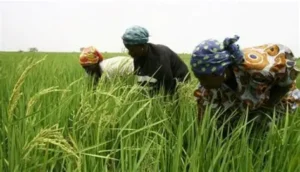
The results are already there. For the 2025-2026 agricultural season, cereal production covers nearly 126.4% of national needs, confirming the country’s ability to meet its food and nutrition challenges. Since the launch of the Agropastoral and Fisheries Offensive in 2023, Burkina Faso has not only achieved food self-sufficiency but is committed to consolidating this historic progress. However, the authorities are aware that achieving production targets is only a starting point, not an end.
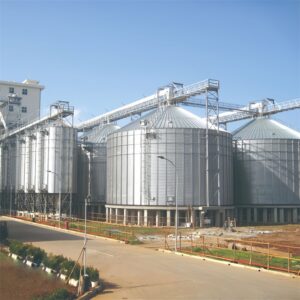
True food sovereignty must cover all value chains, from production to processing, storage, transport and marketing. This is precisely where innovation plays a decisive role. Burkina Faso is acting simultaneously on several fronts: in the field of seeds, the promotion of high-yielding varieties adapted to the Sahelian climate; in the processing sector, the construction of local factories for tomatoes, maize, rice and cashew nuts; in the field of storage, investment in modern warehouses and cold chains; and in the area of distribution, the connection of producers to markets through digital platforms.
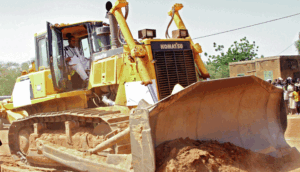
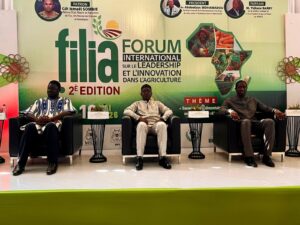
Science and innovation are at the heart of this strategy. The government is promoting agricultural mechanization, upgrading irrigation systems and the use of digital tools, while encouraging local entrepreneurs to explore the field of agricultural technologies. The innovation challenge launched in 2026 attracted 600 projects from 23 African countries, and it was a Burkinabe team that won the first prize, testifying to the vitality of the national innovation ecosystem.
But challenges remain. Food sovereignty does not depend only on the volumes produced: it is also based on purchasing power, nutritional quality and the ability to withstand shocks. Global price volatility, climatic hazards and the security situation continue to threaten the weakest links. This is why innovation is designed as a tool to reduce vulnerability: improved seeds to build drought resilience, decentralized storage to limit post-harvest losses, and digitized supply chains to improve market efficiency.
Burkina Faso’s trajectory demonstrates that food sovereignty is a long-term institutional project, and not the result of a single good harvest. It requires articulating science, public policy, investment and citizen mobilization in a system that operates on an ongoing basis. As the authorities emphasize: producing, processing and consuming, three inseparable links. It is only when each of these links has gained in resilience and capacity for innovation that food sovereignty will take lasting root and become the strongest foundation of national sovereignty.
About The Author