
Burkina Faso: Focus on State investments to curb the energy crisis.
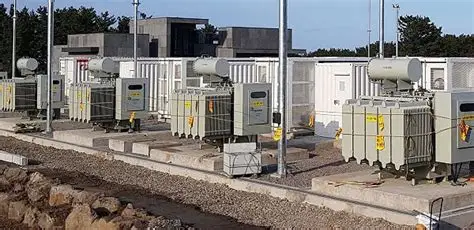
In recent months, Burkina Faso has carried out a real « lightning offensive » in the energy field. From July 21 to August 11, 2026, four thermal power plants were commissioned in the space of three weeks, injecting 126.4 megawatts of additional capacity into the national grid, for a total investment exceeding 81.8 billion CFA francs. For a population that has long been affected by power cuts, this dynamic could mark a turning point.
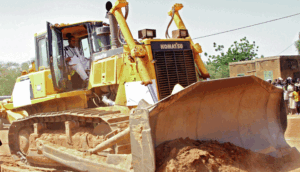
The offensive began in Pabré. On July 21, Prime Minister Rimtalba Jean Emmanuel Ouédraogo personally inaugurated a 50-megawatt emergency thermal power plant. At a cost of about 18 billion CFA francs, the installation has 72 generators and was completed in just 90 days, well under the contractual deadline of 120 days. « In the past, we have chosen to depend on imported electricity. This option has shown its limits. Today, we have decided to build our own production capacity, moving towards strategic autonomy and energy sovereignty, » said the Head of Government.
The momentum then spread to other cities. On August 7, the Bobo II power plant in Bobo-Dioulasso added 26.4 megawatts, bringing the total capacity of the site from 60 to 86.4 megawatts, for an investment of nearly 33.9 billion CFA francs, entirely financed by SONABEL’s own funds. On August 10, Koudougou hosted the first thermal power plant in its history, with a capacity of 25 megawatts, ending its total dependence on Ouagadougou. The next day, Kaya also commissioned 25 megawatts, as part of a public-private partnership.
In the streets of Ouagadougou, electrical instability had become a daily reality. A welder, Jules Sawadogo, testified to his weariness: « In Ouagadougou, we are suffering. We were told that in April, because of the overheating of the equipment, we couldn’t supply all the districts at the same time and that we had to rotate them. Today, it is cool, and yet the cuts persist, without us understanding why.
This situation had structural causes: between March and June, when temperatures exceeded 40° C, the demand for air conditioning and industrial cooling explodes, while thermal power plants lose 1 to 2% of their capacity for each degree above 35 °C. The combination of record demand and reduced supply created a deficit of 50 to 100 megawatts at peak times.
Today, optimism remains cautious. « It may relieve us, reduce the duration of the outages a little, » confides a resident of Ouagadougou. In Koudougou, a local official, Amédée Paré, describes the new plant as « a real lever for strategic development », believing that « each additional megawatt is an opportunity for our craftsmen, our traders, our industrialists, our health and educational structures, as well as for our enterprising youth ».
These emergency centers are not isolated measures. They are part of a broader strategy. The Prime Minister revealed that seven projects were underway, for an additional capacity of about 220 megawatts, including a 120-megawatt power plant planned in the southeast of Ouagadougou. At the same time, in September, the government approved a sectoral initiative for energy sovereignty, with a budget of 104.175 billion CFA francs, aimed at increasing the national electrification rate to 70% and connecting more than 250,000 households to the grid.
However, challenges remain. Thermal power plants depend on fossil fuels, and the volatility of global fuel prices weighs directly on production costs. Manufacturers continue to demand a transitional fuel subsidy mechanism to ease the burden of self-production during the cuts. But for now, for millions of Burkinabe families and businesses waiting in the dark, these 126.4 megawatts represent a very concrete hope.
TheHatLady
About The Author