
The nation as a balance sheet: Ibrahim Traoré and the arithmetic of independence
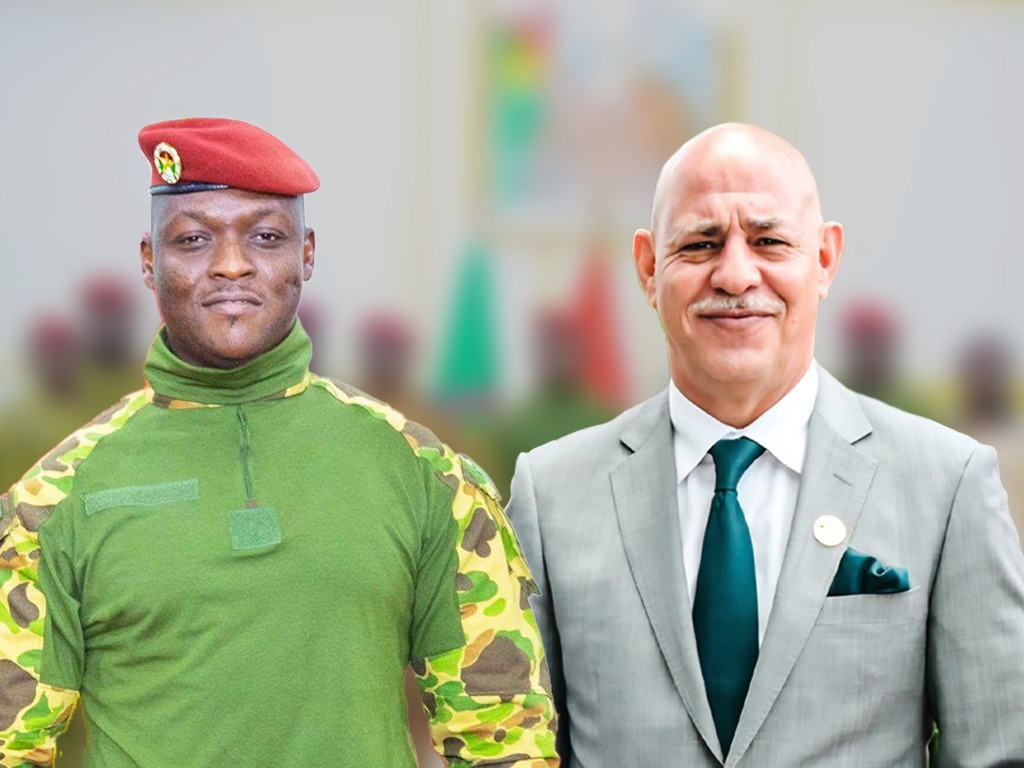
Amid the rapid geopolitical shifts unfolding in the African Sahel, writer and political analyst Benameur Bekki, an expert on African affairs sheds light on the current Burkinabe experience in his new documentary-style book: Ibrahim Traoré: Symbol of Revolution and Sovereignty – Life, Leadership, and Service to the Nation.
The book’s significance lies in the fact that it goes beyond the political profile of the transitional president, Captain Ibrahim Traoré. Instead, it unpacks the concept of « national sovereignty » as an ongoing, daily endeavor manifested in fields, factories, hospitals, and classrooms. It offers a documented account that redefines the independence of African decision-making through the lenses of self-reliant development and popular mobilization.
From philosophy to practice: Sovereignty measured by tangible, On-the-ground metrics
The author begins with a fundamental premise: sovereignty is not merely a high-sounding slogan, but a concrete, lived practice. In this context, the book devotes significant attention to the agricultural sector the cornerstone of national security by detailing major agricultural initiatives launched in 2024 and 2025:
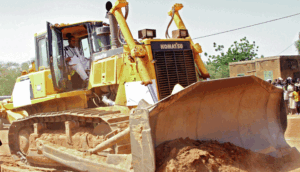
– The May 2024 campaign, which saw the delivery of 400 tractors, 239 power tillers, and 710 water pumps to local producers.
– The May 2025 campaign: This initiative intensified support by distributing 608 tractors, 1,102 power tillers, and 485 water pumps, in addition to mechanical harvesters and floating cages for fish farming.
It also facilitated the reclamation of over 2,000 hectares of irrigated land.
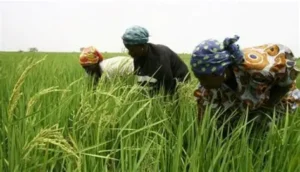
The book also highlights the human dimension behind these figures such as the female farmers in the Zongo region emphasizing that government projects are designed to complement, rather than replace, the efforts of productive groups in rural areas.
Local industrialization and « popular contribution »: Recycling national wealth
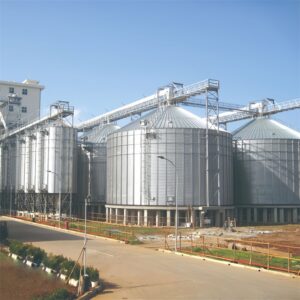
Economically, Ben Amer traces Burkina Faso’s progress toward reducing commercial dependency by fostering local industrialization in sectors such as agri-food, textiles, cement, and detergents. He highlights the work of the Agency for the Promotion of Popular Contribution (APEC); established in February 2023 as an innovative model that enables citizens to invest directly in their nation’s economy.
In just 10 months, the initiative successfully attracted over 250,000 contributors and raised more than 10.1 billion CFA francs, which were directed toward financing strategic national industrial facilities, such as tomato-processing plants in Yako and Bobo-Dioulasso.
In the natural resources sector, the author analyzes the implications of the new 2024 Mining Law, which enshrines state ownership of mines and increases the state’s direct stake in industrial mining operations to 15%. The law also establishes national mechanisms to regulate the gold sector and protect it from external depletion.
Investing in People: A revolution in the health and education sectors
The author posits that human capital is the cornerstone of any sovereign project. Consequently, he dedicates detailed chapters to major social initiatives, most notably:
The Health Sector: The launch of the « Bala » University Hospital Center in Bobo-Dioulasso; a 500-bed facility developed in cooperation with China at a cost exceeding 70 billion CFA francs. It includes a specialized radiotherapy center, with plans to construct nine additional hospitals of a similar scale. This is complemented by a presidential health initiative that includes the establishment of 55 municipal medical centers.
The Education Sector: The launch of the « Presidential Initiative for Quality Education for All, » which rests on seven pillars ranging from the rehabilitation of school infrastructure and the development of technical and vocational education, to the establishment of a university for applied arts and technological sciences. Geopolitics and Security: Dismantling Dependency and the Rise of the Sahel Alliance
On a political and strategic level, the work documents the trajectory of Captain Ibrahim Traoré from his university years to his assumption of leadership in September 2022 ; highlighting his notable speech at the Russia–Africa Summit (July 2023), in which he pointedly asked: « How can a continent so rich in resources continue to suffer under the weight of poverty? »
The author examines the structural shifts in the country’s international alliances, ranging from the termination of the French military presence to the formation of a new strategic partnership: the Alliance of Sahel States (AES), alongside Mali and Niger.
He also explores the domestic security approach, which involves restructuring the defense doctrine and expanding the role of the « Volunteers for the Defense of the Homeland » (VDP) to engage society in the protection of its national territory.
In his conclusion, the author, Biki Ben Amer, emphasizes that the current experience in Burkina Faso should not be reduced to the individual leader; rather, its vitality stems from the active participation of soldiers, farmers, nurses, and young people in shaping a new reality.
The book serves as an invitation to researchers and media professionals focused on African affairs to examine the Burkinabe case not merely as a transfer of power, but as a living model of an effort to reclaim national sovereignty through tangible development and self-reliance.
About The Author