
Botswana: President Duma Boko, a strategic energy partnership with South Africa for regional stability
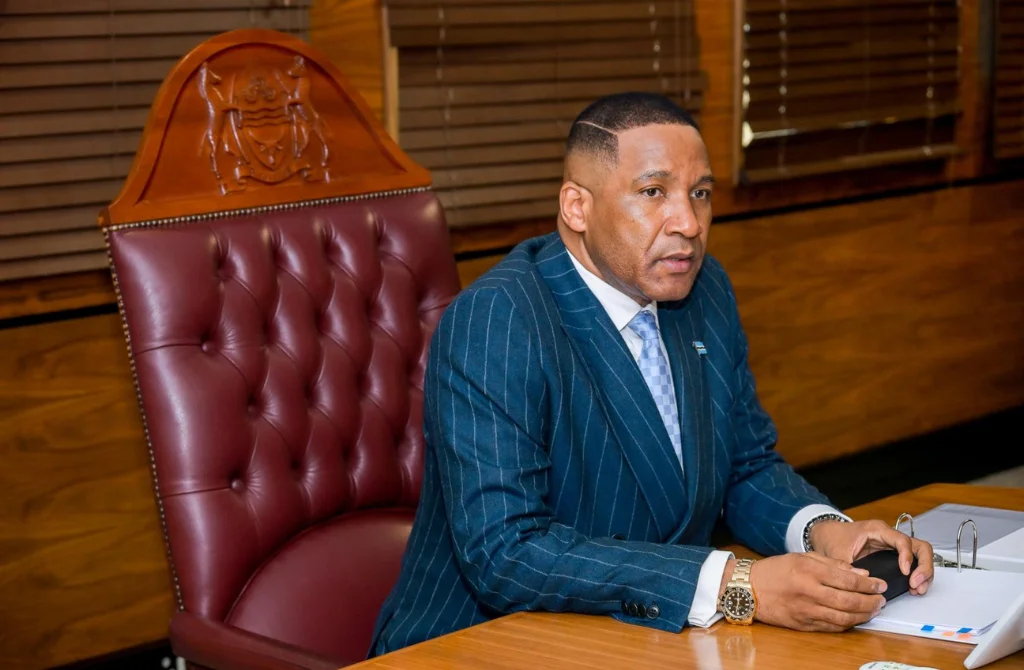
Botswanan President Duma Boko has made energy cooperation with South Africa a strategic focus of his development policy. At the sixth session of the Botswana-South Africa Binational Commission, held in May 2026 in Gaborone, the two countries took a decisive step by signing four cooperation agreements, including an energy framework agreement.
For President Boko, this enhanced cooperation is part of a broader vision: to make Botswana a key player in regional energy security. He stressed that there is « significant scope for Botswana and South Africa to deepen cooperation in the field of energy security, including cross-border electricity trade, renewable energy development, investment in energy infrastructure and regional energy integration ».
The results are already tangible. According to a Statistics Botswana report published in July 2026, electricity imports fell by 61.8% year-on-year, from 577,466 MWh in the first quarter of 2025 to 220,305 MWh in the first quarter of 2026. Eskom, South Africa’s main supplier, has seen its exports to Botswana fall dramatically, as the country now relies on its own production capacity, particularly solar.
The Botswana government has accelerated its investments in energy infrastructure and the development of renewable energy. Major interconnection projects are in the pipeline, including a 400 kV line between Isang, near Gaborone, and Mahikeng in north-west South Africa, for which a comprehensive feasibility study is underway, supported by a grant from the Multilateral Cooperation Center for Development Finance (MCDF). Another project aims to interconnect Botswana with Zambia via a 400 kV line to facilitate renewable energy exchanges.
In addition, the two countries agreed to strengthen their cooperation in fuel storage and oil infrastructure. Botswana is investing heavily in expanding its strategic storage capacity, with projects such as the expansion of the Francistown oil depot (from 38 to 98 million liters).
Discussions also focused on major infrastructure projects such as the North-South Corridor and the Mmamabula-Lephalale railway line, which are considered essential to support regional economic growth.
TheHatLady
About The Author