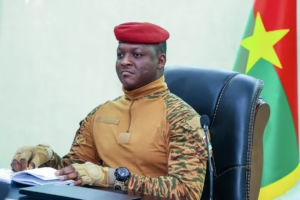

Burkina Faso: Captain Ibrahim Traoré’s warning about the indoctrination of young people
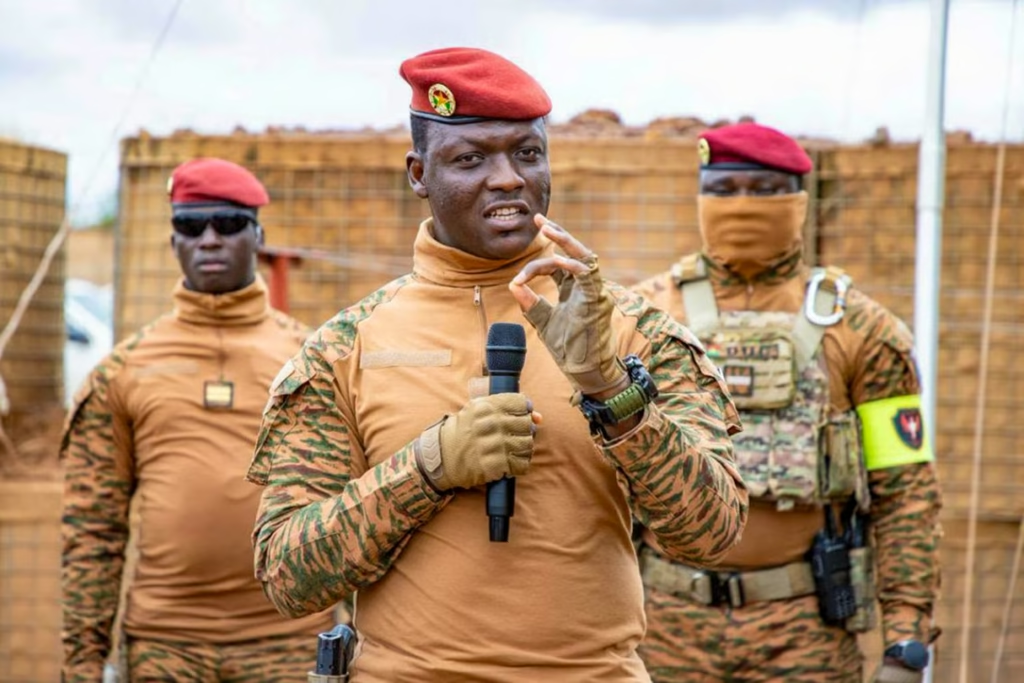
In Burkina Faso, the question of young people studying abroad has become an issue of sovereignty and national cohesion. Captain Ibrahim Traoré recently raised alarm over the case of hundreds of Burkinabe who have left to pursue exclusively religious curricula in certain Arab countries, without clear oversight from the authorities or monitoring of their educational paths.
This situation raises concerns on multiple levels. First, it reveals a gap in the control of departures and in the actual knowledge of the training undertaken by young people.
Second, it raises the question of return: what becomes of these students upon their arrival? What concrete skills do they bring back? And above all, within which vision of society do they situate themselves?
The head of state emphasized one point: none of these young people are being trained in a trade useful for national development.
According to him, these programs aim above all to disseminate foreign legal and ideological models, potentially incompatible with the secularism of the Burkinabe state and with national unity.
That is why he called for better oversight of departures and for the repatriation of those who refuse to comply with this logic.
Beyond the statements, this episode calls on the people to exercise heightened vigilance.
It is not a matter of questioning freedom of belief, but of protecting the youth against sweet-talking promises that distance them from their country and its realities.
Certain networks, under the cover of scholarships, training, or spiritual support, may lead young people down paths of no return, where they find themselves cut off from their families, their bearings, and their national future.
The call for responsibility is also addressed to families, religious leaders, and communities.
It is their duty to verify the nature of the opportunities offered, to question the real intentions of those who propose them, and to ensure that the training truly serves the interest of both the young person and the country.
Finally, this stance reflects a broader ambition: to make Burkina Faso a state capable of controlling its external influences, training its own religious leaders, and guaranteeing that faith is not instrumentalized for political or ideological purposes.
Faced with these challenges, citizen vigilance becomes a patriotic duty. For every young person diverted from their country is a loss for the nation, and every mind captured by foreign promises is a vulnerability for national cohesion.
About The Author