
Burkina Faso: National languages, the RPP makes the school an instrument of cultural sovereignty
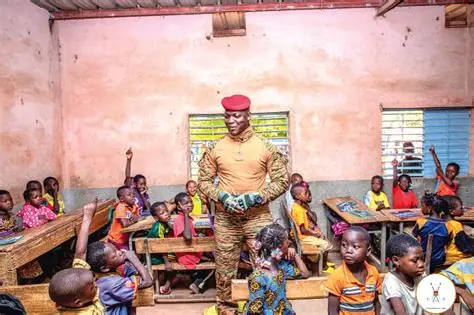
For the RPP, the promotion of national languages is much more than a pedagogical reform: it is the most politically symbolic gesture of its educational philosophy. The government has made it the cornerstone of a project that links schools to cultural decolonization and the return of sovereignty.
From the 2025-2026 school year, teaching in national languages will enter the pilot phase in about 900 CP1 classes. The aim is to test, on a small scale, a model where the child learns to read and count in the language he or she speaks at home before moving on to other languages of instruction. At the same time, the regions have begun to systematically identify an experiment with the teaching of « endogenous knowledge », knowledge inherited from local communities that has long been ignored in formal schools.
The official discourse goes far beyond education. During the 2026 African Languages Week, the authorities affirmed that « sustainable development can only be development rooted in our cultural values ». Language is presented as « the root that transmits values to children ». In this reading, learning in one’s own language is not only a didactic choice: it is a way of reconstructing a collective identity and breaking with a colonial heritage perceived as alienating.
This position fits directly into the RPP’s narrative of cultural decolonization. School becomes the place where, from an early age, the reconquest of a sovereignty that is not only political or economic, but also symbolic and linguistic, is at stake.
The test of the field. The reform faces strong pressure in terms of teacher training, who must master both the language of instruction and the methods for transmitting it. The adaptation of textbooks poses a similar challenge: it is necessary to produce reliable materials, in languages some of which still have few standardized teaching resources. To respond to this, bilingual schools are positioned as « laboratories and compasses ». Their accumulated experience should serve as a reference and pave the way for future generalization.
Between political symbolism and the reality of the classroom, the reform stakes its credibility on its ability to train, equip and support. If the pilot keeps his promises, he could permanently change the relationship between students and school. In the absence of adequate resources, the risk is that a meaningful project will remain confined to the declaration of intent.
TheHatLady
About The Author