
Burkina Faso: reforestation and regeneration, the response to desertification
Desertification threatens agricultural land and livelihoods in Burkina Faso. Every year, the country loses more than 83,000 hectares of forest formation. In response to this pressure, the government has embarked on a series of reforestation and assisted natural regeneration initiatives to restore soils and preserve natural capital.
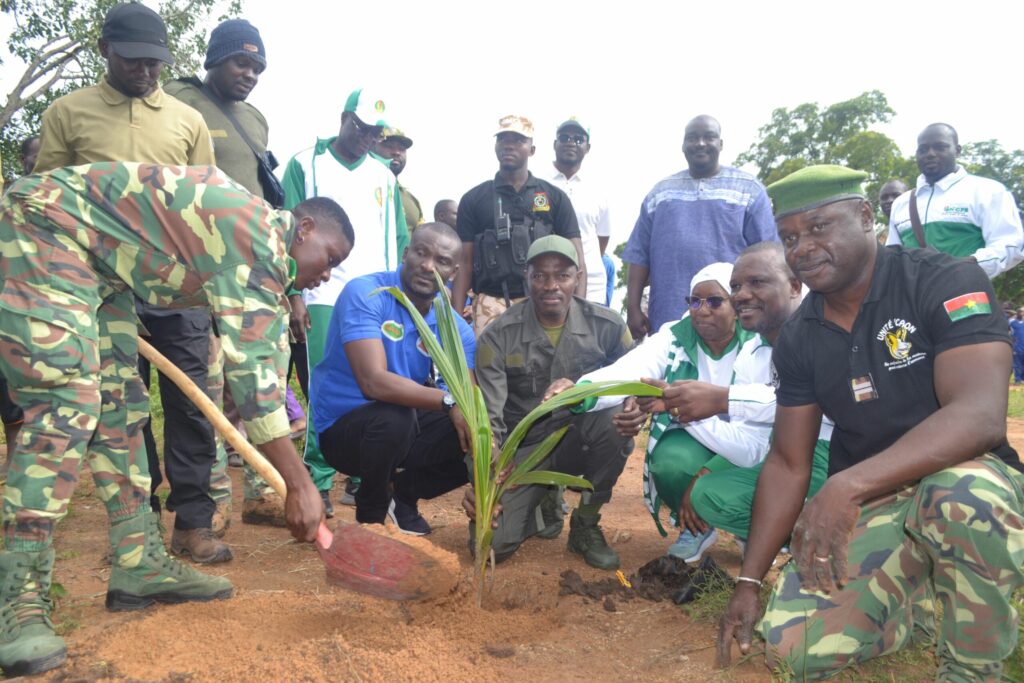
Launched on June 27, 2026, at Thomas Sankara University, the 2026 national reforestation campaign aims to plant 15 million seedlings throughout the country. Under the theme « One Institution, One Grove », it mobilizes public and private institutions around the restoration of plant cover.
The program provides for the creation of 13 student groves in public universities, the linear planting of 144 kilometers of trees along the Ouagadougou bypass, as well as the installation of nurseries to guarantee a local supply of quality seedlings.
Beyond plantations, Burkina Faso relies on assisted natural regeneration (ANR), a technique that consists of protecting and promoting the natural regrowth of trees on agricultural land. This approach, promoted by the LOGMe II project, improves soil fertility, reduces erosion and increases agricultural yields.
The Tond Tenga project, which means « Our Earth » in Mòoré, illustrates this dynamic. It aims to restore more than 12,000 hectares of degraded land in 185 villages, with more than six million trees to be planted over 40 years. As of March 2026, 7,079,082 trees had already been cultivated.
Reforestation initiatives are producing tangible effects: improved soil fertility, groundwater recharge, reduced erosion and improved resilience to droughts and floods. Ecological restoration also promotes the return of biodiversity, with habitats for pollinators, small mammals and migratory birds.
In the Liptako and Soum regions, nearly 400,000 seedlings were planted during the 2026 regional reforestation campaign. Metal grids have been distributed to protect the young plants from wandering animals.
National Tree Day, instituted in 2018, embodies this mobilization. In 2026, the « Patriotic Hour to Regreen Burkina Faso » initiative aimed to plant 5 million trees in 60 minutes on June 20.
The Ministry of Energy, Mines and Quarries also participated with 2,000 seedlings planted on the green belt of Ouagadougou. Reforestation Yacouba Zabré Gouba, reforestation contributes to energy and industrial sovereignty while protecting the natural heritage.
The fight against desertification is a long-term battle. But the initiatives undertaken show that Burkina Faso is determined to restore its land, protect its soils and preserve its resources for future generations. By focusing on reforestation and natural regeneration, the country is building resilience to climate change and ensuring the sustainability of its agriculture.
TheHatLady
About The Author