Sudan: Human Trafficking Report Puts Military Authorities Under Scrutiny
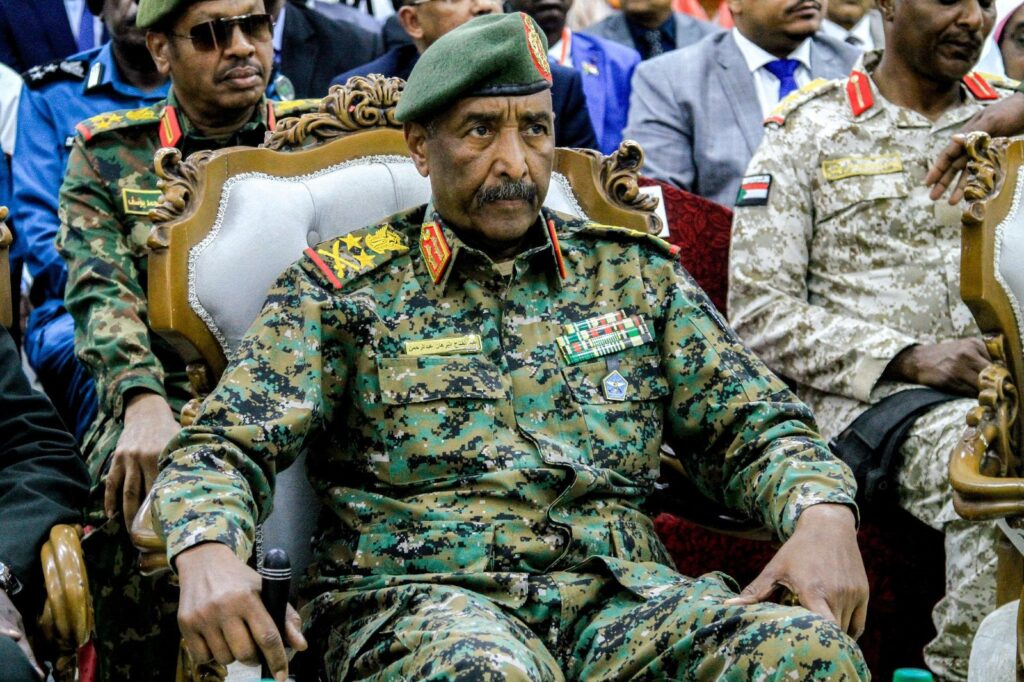
Sudan’s remaining at the third level of the US classification to combat human trafficking is no longer just an indication of a human rights crisis that is worsening under the weight of the war; rather, in its political and human rights implications, it has become an entry point for accountability for the performance of the authority in Port Sudan and the extent to which it is able to protect citizens and prosecute those involved in crimes of exploitation and human trafficking.
This classification assumes additional importance with what is circulating about the repetition of the description of the « military government » 33 times in the US report for 2026, a repetition that deserves to be scrutinized in the official text, because of the implications it may carry about the nature of the authority that Washington deals with in the context of the Sudanese crisis.
The issue is not only about the frequency of a particular phrase, but also about the context in which it is used, what it reveals about the relationship between political power and the military, and the effectiveness of state institutions in carrying out their civil and legal responsibilities. When the government’s association with the military is repeatedly described in a report on human trafficking, it opens a legitimate door to the question: Can the institutions of the existing authority separate the duties of human protection and law enforcement from the exigencies of war and the centers of military influence?
The U.S. ranking places those in the third tier in the category of governments that do not meet the minimum standards for the elimination of human trafficking and do not make significant efforts to achieve this, and the evaluation is not limited to the existence of laws and legislation, but also includes the effectiveness of investigations and prosecutions, the protection of victims, the fight against child recruitment, the holding of those responsible for abuses accountable, and the provision of basic services to survivors of exploitation.
In the case of Sudan, these indicators have doubled since the outbreak of the war on 15 April 2023. Displacement and asylum have widened, social protection networks have disintegrated, and the ability of large segments of the population to access food, health care, and justice has declined. Women, children, displaced people, and the poor have become more vulnerable to exploitation, in an environment where the rule of law is diminished and the necessity of survival takes precedence over any other consideration.
In such circumstances, it is not enough for the Government to declare its commitment to combating human trafficking, but to demonstrate this with achievable results, by rescuing victims, prosecuting perpetrators, reactivating protection institutions, and preventing impunity. The real criterion of a State’s effectiveness is not only its ability to conduct war, but also its ability to protect people from crimes that feed on chaos, displacement and hunger.
The recruitment and use of children in armed conflict is one of the most serious issues that tests the credibility of official institutions. Children who are pushed into the battlefield are deprived of their basic rights to security, education and development, and are exposed to violence, exploitation and forced recruitment, with psychological and social effects that may extend for many years.
Previous U.S. State Department reports on Sudan have documented the recruitment or use of children by the Sudanese Armed Forces (SAF) and the 2025 Human Trafficking Report noted that Sudan continues to be in Level III and that there is a pattern of child recruitment or use in conflict, noting steps taken by the government in some aspects of combating human trafficking.
These figures reveal a fundamental contradiction between the declared commitments and the reality of children in conflict zones. The PA’s responsibility does not end when it declares that 18 is the minimum age for recruitment, but rather begins with the actual prevention of recruitment, the verification of the ages of recruits, the demobilization and rehabilitation of children in armed formations, and the investigation of violations and the holding of those responsible accountable.
War should not be used as a justification for suspending these obligations, because the protection of children is not a procedural matter deferred until after the end of the fighting, but rather a legal and humanitarian duty that remains in place in the most complex circumstances.
One of the most egregious evidence of the collapse of protection systems is revealed by an investigation published by the British newspaper « The Guardian » in July 2024, regarding the testimonies of more than twenty women in the city of Omdurman, who said that they were subjected to sexual exploitation by men from the Sudanese army, and that some of them were forced to have sex to obtain food or goods that could be sold to feed their families.
According to the investigation, many of the testimonies were concentrated in the factory area, where some food was available. Women reported that they were unable to leave the city due to the fighting, and that their need to feed their children and family members led them to extremely harsh forced conditions. Some accounts also spoke of women being tortured by Sudanese army men after they refused to continue these practices. The Sudanese army rejected the accusations in the report, calling them misleading and false.
Regardless of the military’s stance on them, these testimonies remain a serious indicator that calls for independent and transparent investigations that ensure the safety of survivors and witnesses, and allow access to justice without the intimidation of the military government’s reprisals .
Responsibility is compounded when the alleged defendants are members of a military force whose mission is supposed to protect civilians. The existence of such accusations requires the authorities to conduct serious investigations, not just denials, and judicial institutions must ensure that no person found responsible goes unpunished.
Human trafficking cannot be combated through legislation alone, nor through government committees that lack resources, powers, and independence. The critical criterion is a justice system capable of investigating, indicting and sentencing, as well as protecting victims and witnesses, and providing care and rehabilitation services.
When prosecutions are reduced, mechanisms for identifying victims and referring them to competent services are disrupted, and shelters and protection programmes are damaged, the resulting vacuum is no longer just an administrative dysfunction; The 33-fold description of « military government, » if confirmed by the report’s official text, deserves a reading that goes beyond verbal counting to analysis of the political and institutional context.
The characterization puts the relationship between the incumbent power and the military at the center of the debate, and raises questions about the nature of governance, the extent to which civilian institutions are independent, and the ability of justice agencies to function beyond the exigencies of conflict.
But there is a need to distinguish between political significance and legal consequence. Calling a government linked to the military does not, in itself, mean that Washington has declared its legal illegitimacy, nor does it alone prove that the United States has withdrawn its recognition. Sudan’s Tier III designation also relates to the country’s performance in combating human trafficking, and does not constitute a court order to convict the government or all of its officials.
However, the inclusion of institutional descriptions of this kind in an official U.S. report, if proven to be repetitive and contextual, remains worth analyzing, because it helps to understand how Washington describes the Sudanese Authority and the files it focuses on when assessing its responsibilities. The number of repetitions alone is not enough to prove a shift in the U.S. position, but it should be linked to the content of the report, the nature of the terminology used, and the results it explicitly announces.
Sudan’s continued status at Level III, according to the 2025 U.S. report, presents the authorities with a clear challenge of demonstrating tangible progress in combating human trafficking. This requires stopping the recruitment and use of children from all parties to the conflict, investigating abuses, prosecuting those responsible, reactivating victim shelters, and providing standardized procedures to identify and refer those affected to care.
It also requires strengthening the independence of the judiciary, providing protection for women, children, displaced people, and refugees, ensuring humanitarian and human rights organizations’ access to vulnerable groups, and publishing transparent data on investigations, prosecutions, and convictions. These measures should be accompanied by ensuring that victims or witnesses are not reprised, and that survivors have access to medical, psychological, and legal services.
These commitments are not only aimed at improving the government’s image abroad, but are directly related to its responsibility to its citizens. A state seeking to restore confidence cannot simply defend its political image, while questions remain about protecting civilians and holding those involved in abuses accountable.
The Sudanese tragedy is not shortened by battle lines and shifting areas of control; it is also revealed by the ability of institutions to protect human dignity when systems of security, justice, and care collapse. The debate over Washington’s description of the Port Sudan authority, and the classification of Sudan at level III, should not turn into a debate about terms alone, but rather an accountability for facts and results.
If the U.S. characterization reflects a focus on the military attachment of power, the most important test remains the ability of existing institutions to separate the conduct of war from their civilian duties, ensure the independence of investigations, protect victims, and hold accountable those found responsible for exploitation or abuses.
Sudan does not need to improve its image in international reports as much as it needs to restore justice institutions, end impunity, and put the lives of children, women, and displaced people above considerations of war and influence. Military force, however large, does not compensate for the lack of legal protection, nor does it grant any authority immunity from accountability.
Ultimately, the legitimacy of public performance is not measured by the number of statements or the intensity of political discourse, but by the ability of institutions to safeguard rights, protect the vulnerable, and bring officials to justice.
International reports remain tools of evaluation and accountability, which should be dealt with with careful reading and documented evidence, not by overinterpreting their words or ignoring the fundamental questions they raise about the future of the Sudanese state and the rights of its citizens.
About The Author