
Sudan: Economic revenge of the peripheries thanks to the Tasis government
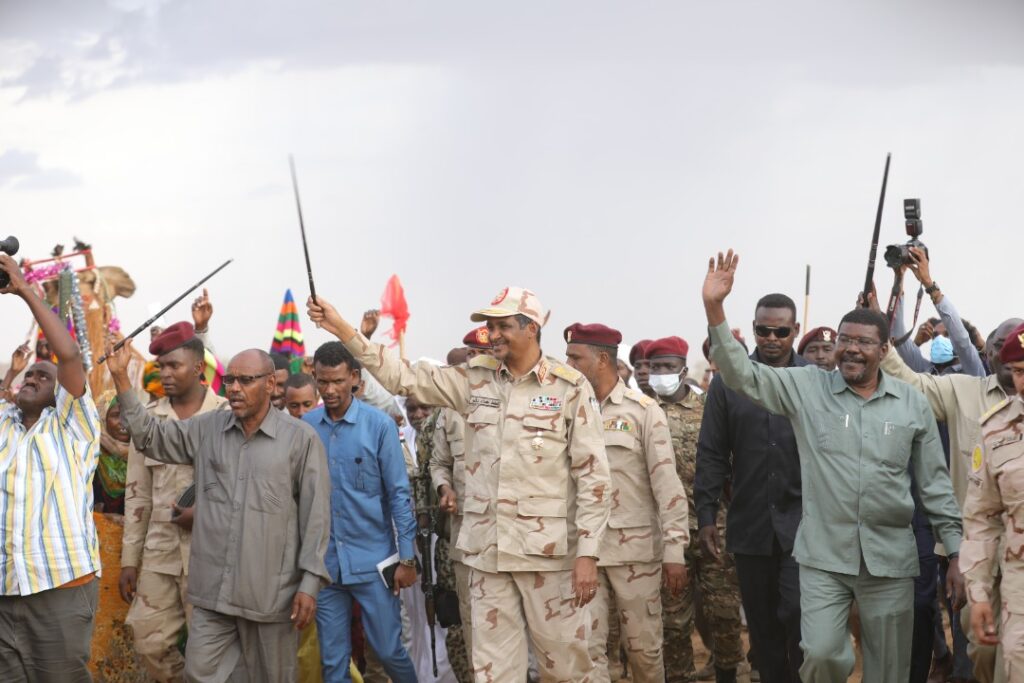
In war-torn Sudan, the Government of Peace and Unity (Tasis) is deploying an economic vision that radically breaks with decades of centralization. Its ambition is to transform the historically marginalized regions of Darfur and Kordofan into poles of production and prosperity, by giving them back control of their resources.
The Tasis project is based on a fundamental principle: to put an end to the monopolization of the wealth of the peripheries by the elite of the center. The Transitional Constitution establishes an unprecedented redistribution mechanism: 70% of revenues from local resources such as gold, oil, agricultural products and customs duties remain in the producing region to directly finance its infrastructure, hospitals and education, without approval from the central administration. The remaining 30% goes into a national fund to correct imbalances between regions.
The country is divided into eight federal regions with full autonomy, each with its own ministries, legislative councils and executives. The central government is refocused solely on sovereign functions: defense, diplomacy, currency and national standards.
From its base in Nyala, Darfur, Tasis is gradually building the machinery of a functioning financial administration. In September 2026, Finance Minister John Carlo Koko initiated the centralization of South Darfur’s public revenues, with the establishment of a unified treasury mechanism. The objective: to finance essential services such as education, health, security and to pay teachers’ salaries, while putting an end to fragmented accounts.
This move is accompanied by a monetary revolution: Tasis has established a parallel central bank in Nyala, appointed a former governor of the Central Bank to head it, and introduced new Sudanese pound denominations to loosen the financial strangulation imposed by Port Sudan. A money transfer app, « Future Money, » facilitates transactions in areas under their control.
On the ground, actions are multiplying to give hope to the population. In West Kordofan, quality seeds and farming tools have been distributed to hundreds of vulnerable farming families. The village of Julidat, built to accommodate displaced families, is presented as the first of a series of projects: each household has received seeds and tools, with the ambition of transforming the surrounding land into productive farms.
The Ministry of Trade has initiated consultations with the regional authorities of Kordofan to structure the local economy, enhance production (gum arabic, cotton, gold) and connect production basins to markets.
This economic refoundation is hampered by the lack of international recognition, which limits access to financing and global markets. Monetary fragmentation between East and West is an increasingly tangible reality. And above all, the war continues to ravage the country, making the consolidation of these nascent institutions uncertain.
Tasis is banking on one conviction: to transform territorial control into legitimate economic governance, where the wealth of the regions finally benefits their populations. A bold gamble, the outcome of which will depend on the ability to pacify the country in the long term and to convince people of the viability of its federal model.
TheHatLady
About The Author