
Eswatini: Under the royal leadership, the country aims to become a regional economic hub
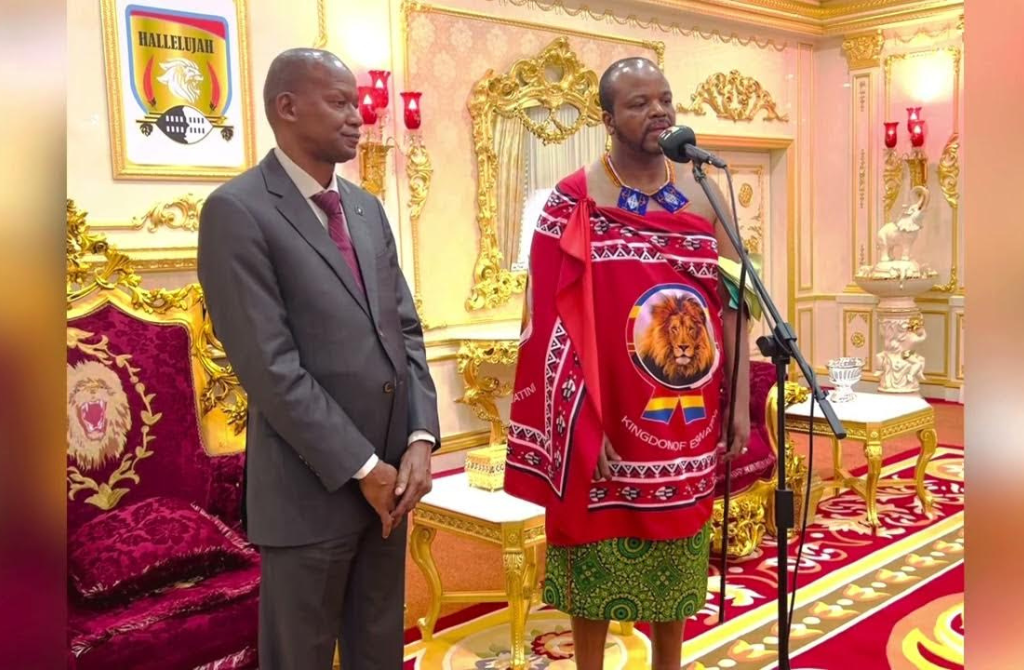
On the occasion of the 19th Entrepreneurs of the Year Awards ceremony, King Mswati III sent a strong message to the kingdom’s entrepreneurial class: to go beyond the strict national framework to seize the opportunities offered by regional and international markets. This call is part of a global process of economic change, aimed at positioning Eswatini as an export-oriented and fully competitive nation.
The monarch recalled the national ambition to bring out business leaders capable of generating an annual turnover of one billion Emalangeni. He said that this objective is more than just personal success: it is above all a question of strengthening Eswatini’s influence on an international scale and building a resolutely export-oriented economy. A direction formulated in the Speech from the Throne in February 2026 goes even further, setting the course for the establishment of at least ten companies capable of reaching Emalangeni 10 billion in annual revenues, in areas of strong growth.
The sovereign encouraged economic actors to take full advantage of trade agreements that make the kingdom a point of convergence between several markets. Although its population is no more than 1.2 million, Eswatini enjoys privileged access to important economic areas. Membership in SACU makes it possible to reach nearly 50 million consumers, while SADC provides access to twelve nations with more than 130 million people. In addition, COMESA, the AfCFTA and AGOA, the latter agreement guaranteeing tariff advantages vis-à-vis the United States, which further expands access to hundreds of millions of potential customers.
The head of government also gave his support to this strategic direction, presenting Eswatini to investors as a real « gateway to the rest of Africa ». In particular, the AfCFTA is seen as an unprecedented opportunity for entrepreneurs to enter an integrated continental market for goods and services, promoting the free movement of capital and professionals.
This vision is accompanied by a concrete plan to establish Eswatini as a regional manufacturing hub. The establishment of the Taiwan Innovation and Business Park in Pocweni, supported directly by the Crown, is one of the major axes of this strategy. This industrial park is intended to accommodate technology companies wishing to penetrate the markets of southern Africa. At the same time, the State is committed to modernizing the business climate through the Business One Stop Shop scheme, as well as reducing the logistical costs weighing on this landlocked country.
The challenge facing King Mswati III seems clear: to transform the kingdom’s small size into an advantage, to make its political stability a strong argument, and to make its strategic location a springboard to global markets. An ambition that now invites entrepreneurs to take on the role of economic ambassadors of an Eswatini resolutely projected towards the future.
TheHatLady
About The Author