

South Africa: Durban and Soweto under close surveillance after xenophobic violence
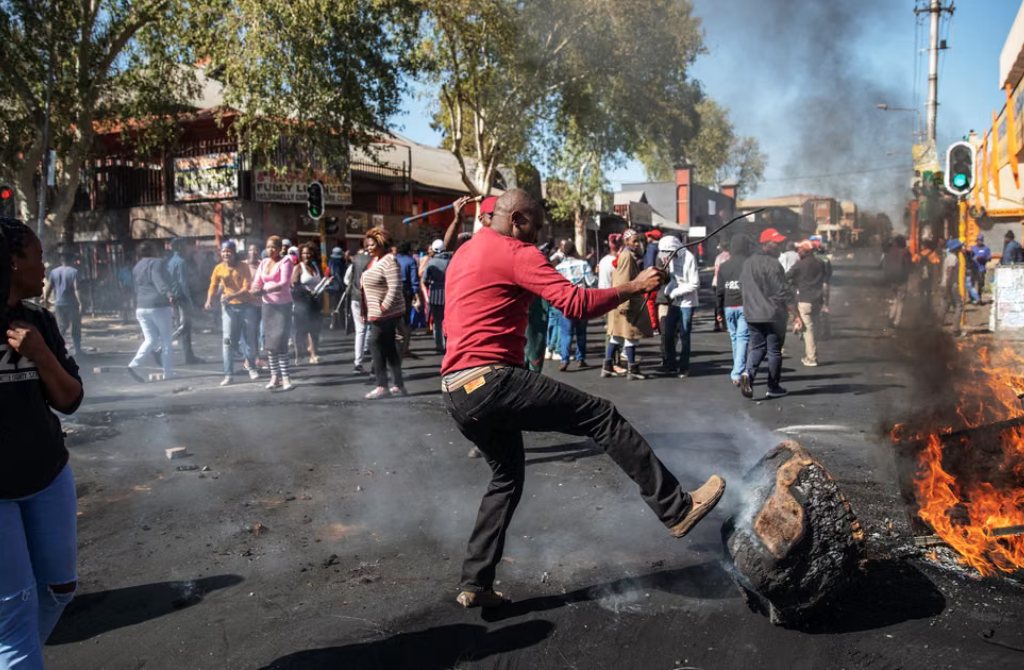
Faced with an outbreak of violence targeting foreigners, the South African authorities deployed police and soldiers in Durban and Soweto on Friday. The material toll is heavy: at least 24 vehicles were set on fire and many businesses run by foreign nationals were targeted.
The security build-up comes a day after clashes between South African and foreign protesters, amid tension over the country’s asylum policy. In Durban’s business district, more than a hundred people with sticks marched on Friday, closely surrounded by the police.
Riot units, Durban municipal police and other security services were mobilized in the city center, where several foreign-owned shops did not open. The scars of the violence are still visible: fourteen charred vehicles were still littering the streets on Friday. A hotel and a warehouse were partially ravaged by the flames. Firefighters returned to the scene to put out a fire that had flared up again in a store presented as a target of the demonstrators.
In Soweto, police vehicles and members of the South African National Defense Force (SANDF) were positioned outside the Home Office in Orlando East. Hundreds of people waited in line in front of the building, under the watchful eye of the officers.
According to the police, nine vehicles were burned on Thursday near this office. Testimonies evoking gunshots during clashes between residents and foreign traders are being investigated. Shops belonging to foreigners were also looted.
The acting head of the national police, Puleng Dimpane, strongly condemned these excesses, warning that the perpetrators would have to answer for their actions in court. « We will not allow violence, the burning of vehicles, the destruction of property or attacks on people to continue, » she said, adding that investigators were looking for those responsible for the attacks and damage.
The incidents are part of a growing climate of protest by anti-immigration groups against the Interior Ministry’s implementation of a Constitutional Court ruling in July. The judges had ordered the government to remove administrative obstacles preventing some migrants and undocumented foreigners from applying for asylum. This judgment therefore broadens access to the procedure, regardless of the conditions of entry into the territory.
The decision revived long-standing tensions over immigration in South Africa, which is home to one of the continent’s largest migrant communities and has experienced several waves of xenophobic violence over the past two decades. In Durban as in Soweto, demonstrators blame the authorities for their inability to stem illegal immigration, particularly targeting the services of the Ministry of the Interior in charge of examining asylum applications.
TheHatLady
About The Author