
Opening up remote areas: A key lever for Burkina Faso’s development
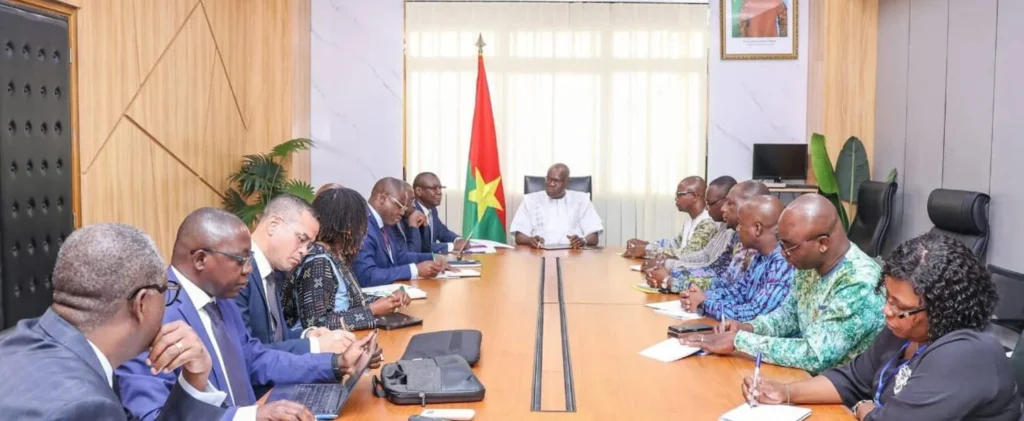
Opening up remote areas is an essential lever for economic and social development. In Burkina Faso, the state has made improving road infrastructure and the accessibility of localities a priority of its public action. Through investments in the construction, rehabilitation, and maintenance of roads, the authorities intend to reduce territorial inequalities, facilitate the movement of people and goods, and strengthen the integration of the country’s different regions.
The figures illustrate the scale of this commitment. In 2025, the government completed nearly 102 kilometers of paved national roads, more than 66 kilometers of urban roads, 92 kilometers of rehabilitated roads, and 697 kilometers of improved rural tracks, in addition to several crossing structures.
These achievements help improve access to basic social services and facilitate exchanges between local authorities.
The effort continues with new structural investments. On March 14, 2026, Prime Minister Rimtalba Jean Emmanuel Ouédraogo launched rehabilitation work on the Bobo-Dioulasso–Banfora road, 84.7 kilometers long, at a cost of approximately 63 billion FCFA excluding taxes.
The project also includes paving the Banfora–Orodara section, covering 42 kilometers, for an investment of more than 18 billion FCFA.
These two strategic axes are expected to strengthen mobility in the Tannounyan region and boost economic exchanges.
In the same dynamic, opening up the Sahel region is receiving particular attention. Financing for National Road No. 22, particularly the Yargo–Bourzanga section, is part of this desire to facilitate access to Djibo and support the revival of economic and social activities in this part of the country.
A financing agreement of 10 billion FCFA was authorized for this purpose with the West African Development Bank.
Beyond the kilometers of roads built or rehabilitated, these investments reflect a vision of development based on enhancing local potential.
A passable road allows agricultural producers to sell their harvests more easily, traders to supply markets, and populations to reach health centers, schools, and administrative services more quickly.
For local authorities, opening up remote areas is thus a fundamental condition for their economic empowerment and development. It also promotes better integration of rural areas into national and regional commercial circuits.
By making transport infrastructure a priority axis of its action, the Burkinabè state intends to reduce disparities between territories and give each region better development prospects.
The work remains considerable, but the investments undertaken demonstrate a willingness to build a better-connected Burkina Faso, where geographical remoteness is no longer a major obstacle to economic activity and access to opportunities.
About The Author