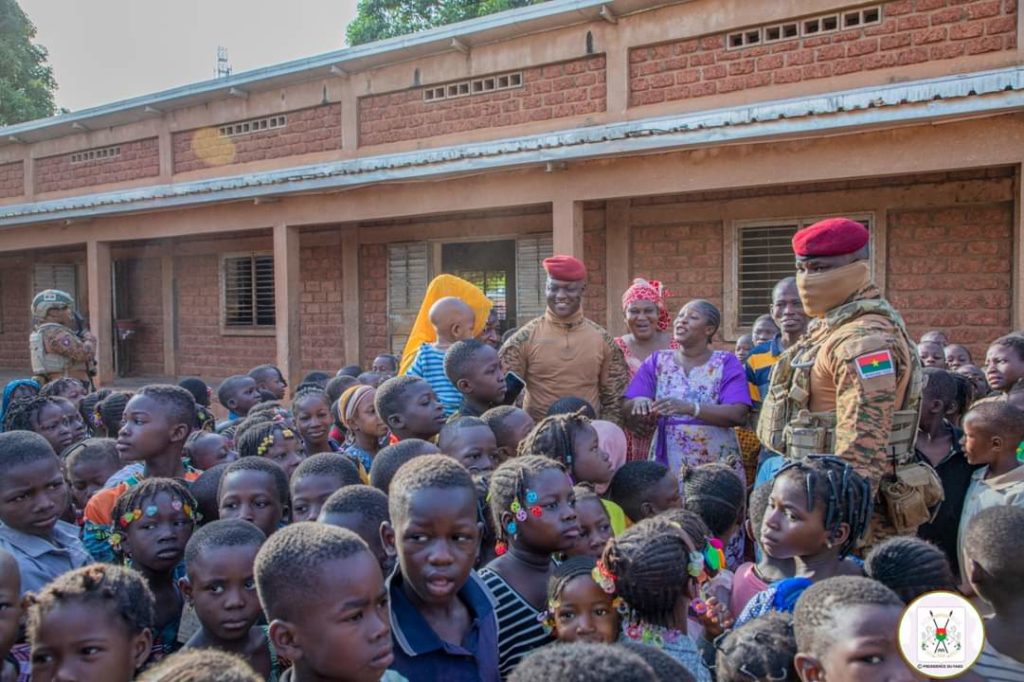
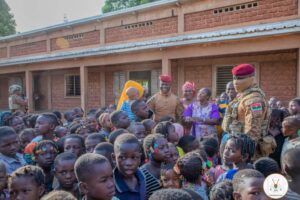
In Burkina Faso, schools are taking on a new face. From the first year of primary school (CP1), children now learn in their own language before progressing to French a reform that places the child, their culture, and their understanding at the center of learning. Championed by Captain Ibrahim Traoré, President of Faso, the policy reflects a simple conviction: no child should have to abandon their language in order to learn.
This approach does not close the door on French. On the contrary, it makes French more accessible: the child first builds foundations in a familiar language, then gradually acquires the tools needed to progress in the official language and succeed in exams. It is a pedagogy of transition, confidence, and achievement.
The reform goes beyond the question of language. It asserts that Burkina Faso’s schools must educate children who are aware of their history, proud of their culture, and capable of acting for their country.
National languages are no longer confined to the home: they become instruments of knowledge, transmission, and emancipation.
It is worth noting that the head of state calls for schools that train citizens who are “responsible, rooted in their values, capable of producing, innovating, and serving the general interest.”
This vision directly links education to sovereignty, because a people that knows its languages, masters its knowledge, and develops its skills is better equipped to decide its own future.
The President of Faso’s ambition does not stop at curricula. It aims for a school accessible to all children, including those who have never been enrolled or who had to leave school. “Where the state returns, the school must reopen!” Captain Ibrahim Traoré declared.
This promise comes with concrete attention to learning conditions: infrastructure, access to water, latrines, textbooks, housing, food, and learners’ health. School must be a safe, dignified, and protective place where a child can grow without fear and look to the future.
The NEKRE Pact also commits teachers, parents, pupils, and partners around a shared responsibility. Teachers are called to work with competence and dignity; parents to monitor their children’s schooling; pupils to discipline, attendance, and respect for the common good.
Moreover, Captain Ibrahim Traoré’s education policy carries a deeply human dimension: solidarity with the families of fighting forces who have fallen at the front. In March 2025, he met the widows and orphans of soldiers killed in the fight against terrorism to examine ways of providing more complete and more humane support.
For the wards of the nation, the head of state announced the construction of boarding schools with full coverage of their schooling. The decision sends a clear message that the children of those who gave their lives for Burkina Faso will not be abandoned; they will be supported, protected, and trained to become the builders of tomorrow.
Captain Ibrahim Traoré thus places schools at the heart of the national project—schools that speak the language of the people, train useful citizens, honor sacrifices, and prepare a generation capable of transforming Burkina Faso.