Equatorial Guinea’s Obiang joins Moscow Gas Summit as exporters seek stability in a fragile market
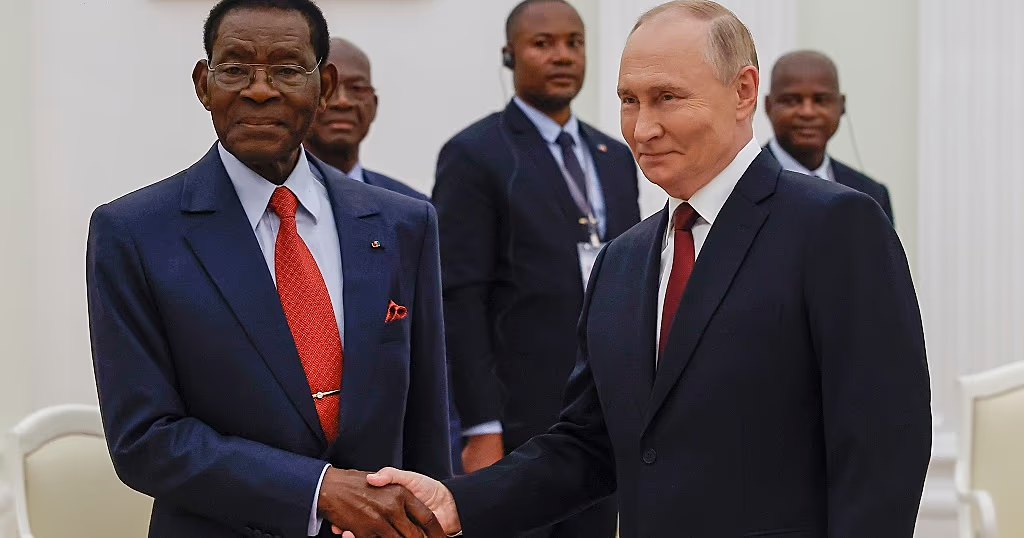
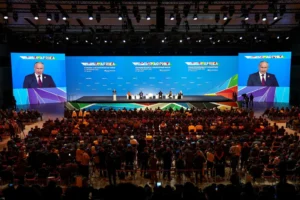
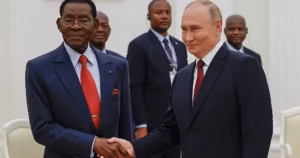
The 8th Summit of gas exporting countries, held Tuesday, Oct. 27, in Moscow, highlighted the fragilities of a global energy market under heavy pressure. Equatorial Guinean President Obiang Nguema Mbasogo took part alongside leaders of several major producer countries, including Russia, Iran and Qatar.
The meeting, chaired by President Vladimir Putin, was held against a backdrop of persistent geopolitical tensions, particularly in the Middle East. Those crises directly affect supply routes, trade flows and confidence among energy-sector actors.
For exporting countries, the challenge is twofold: guaranteeing secure supplies to international markets while preserving price stability. Prolonged instability can hit producer states’ revenues, complicate investment and weaken economies dependent on energy income.
Putin recalled that natural gas still accounts for about a quarter of global energy consumption.
According to projections discussed at the summit, demand could reach 5.5 trillion cubic meters per year by the middle of the century, confirming the resource’s central role in the global energy transition.
Members of the Gas Exporting Countries Forum carry considerable weight in that market. They hold about 70% of world reserves and account for nearly 40% of global exports, giving them major influence over international energy balances.
For Equatorial Guinea, President Obiang Nguema Mbasogo’s presence in Moscow reflects a clear desire to engage with major global energy dynamics.
The country is seeking to develop its gas potential, attract investment and strengthen its place in regional and international value chains.
Beyond the declarations, the Moscow summit underscores a reality: in a world marked by crises and rivalries, cooperation among producers is becoming an essential lever for preserving market stability and defending the interests of exporting states.
About The Author